
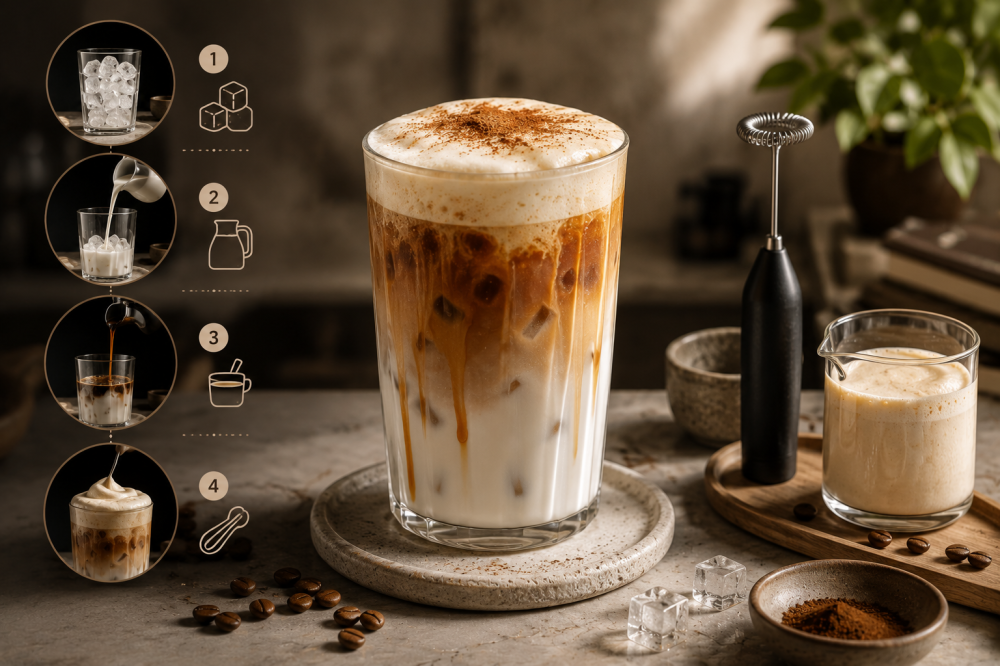
There are drinks you order out of curiosity, then suddenly become your go-to order every time you enter a café. The iced Spanish latte is one of them. Not because it's the most complex coffee drink—quite the opposite, in fact; its appeal lies in the combination of a few ingredients that delivers a creamy, cool, sweet, and well-balanced cup with the flavor of espresso.
Most importantly, making an iced Spanish latte at home doesn't require a long list of ingredients. A good espresso, cold milk, sweetened condensed milk, ice, and a few other small details are all it takes to make a simple cup look like the one you get at a café.
The recipes vary in the proportions of condensed milk, espresso, and milk, so there is no single mandatory formula; however, the basic ingredients revolve around these three elements with ice for cold serving.
In this guide from Coffee Luxury , we will explain in detail how to make a cold Spanish latte like the cafes do , how to choose the right coffee, what ratio gives you the best balance, and how to avoid mistakes that make the drink too sweet or weak in coffee flavor.
ﻻ
What is a cold Spanish latte?
A cold Spanish latte is a coffee drink that typically combines:
- Espresso.
- Sweetened condensed milk.
- Cold liquid milk.
- the snow.
It differs from the traditional latte in that sweetened condensed milk adds sweetness and a creamy texture, instead of relying on milk alone.
Recipes circulating in Saudi Arabia and the region indicate the use of condensed milk with milk, espresso and ice as the base of the drink, with varying quantities and additions from one recipe to another.
The word “cold” simply means that the ingredients are served over ice, and the espresso is often added at the end or after it has cooled slightly to maintain the shape of the layers.
Ingredients for a cold Spanish latte, just like in cafes.
To prepare a large, balanced cup, you can start with the following ingredients:
- Double shot espresso , approximately 30–40 ml depending on the dose and method of preparation.
- 20–30 grams of sweetened condensed milk.
- 150–180 ml of cold milk.
- An appropriate amount of ice cubes.
- A sprinkle of cinnamon is optional for serving.
These ratios are not a fixed rule; you can adjust them according to your preferred level of sweetness and coffee strength.
If you like your Spanish latte with a distinct coffee flavor, start with a smaller amount of condensed milk.
If you prefer it sweet and creamy like some cafe recipes, you can gradually increase the quantity.
What is the best coffee for preparing a Spanish latte?
This is where the true quality of the drink begins.
Because milk and condensed milk add a great deal of sweetness and texture, you need a coffee that can maintain its presence amidst these ingredients.
It is preferable to choose a balanced espresso with a clear flavor, and its beans can have nuanced notes:
- Chocolate.
- Caramel.
- Nuts.
- Cocoa.
- Dried fruits.
These flavors are generally suitable for milk-based drinks.
Coffee with very high acidity and very pronounced fruity flavors may give a different result when mixed with condensed milk.
This does not mean that it is unsuitable; rather, it depends on the flavor you want to achieve.
How to make a cold Spanish latte step by step
1. Prepare the espresso
Start by preparing a double shot of espresso.
If you are using an espresso machine, try adjusting the dosage and grind to get a balanced shot instead of relying on bitter or over-extracted coffee.
If you don't have an espresso machine, you can use an alternative method to prepare concentrated coffee, but the closest result to cafes is usually achieved by using espresso.
2. Prepare the condensed milk base
Place the sweetened condensed milk in a serving cup.
Add a small amount of cold milk and stir until the mixture is homogeneous.
This step is important because condensed milk is relatively thick, and mixing it beforehand helps to distribute it throughout the entire drink.
3. Add ice
Fill the cup with ice.
It is preferable to use good quality, clean ice cubes, because when ice melts it becomes part of the drink and may affect its taste.
Also, too much ice can cause the Spanish latte to become diluted too quickly.
4. Add the cold milk
Pour the cold milk over the condensed milk and ice mixture.
You can leave a small space at the top of the cup for the espresso.
At this stage, the drink will begin to take on its familiar appearance: a light milk layer interspersed with condensed milk.
5. Add the espresso
Pour the espresso slowly over the milk.
If the espresso is too hot, you can wait a little while after extracting it before adding it, especially if you want to maintain clear layers and reduce the ice melting quickly.
Here you can get the attractive look that distinguishes a cold Spanish latte like those in cafes .
6. Add the finishing touch
The drink can be served as is, or with the following additions:
- A sprinkle of cinnamon.
- Caramel sauce.
- Chocolate sauce.
- pistachio.
- Light milk foam.
But don't overdo the additions.
The basic idea of the Spanish latte is based on a clear balance between coffee, milk, and sweetness.
How to make a Spanish latte as cold as the ones in cafes?
The difference between a homemade recipe and the drink you get at a cafe is often not just in the ingredients, but in the quality of each ingredient and how it is prepared .
Use freshly brewed coffee
Fresh, properly stored beans give you a more pronounced flavor than old coffee.
You don't need to use the most expensive types of coffee; the important thing is to choose beans suitable for espresso and that are also suitable for milk-based drinks.
Adjust the espresso
If the espresso is too bitter, its taste will be strongly present even with condensed milk.
If it is too weak, the coffee will disappear behind the milk.
Therefore, the goal is to prepare a balanced shot that retains its flavor even after adding milk.
Don't consume too much condensed milk.
This is one of the most common mistakes when preparing a Spanish latte with condensed milk .
Sweetened condensed milk is rich in sweetness, so adding too much of it may turn the drink into a sweet beverage that completely overwhelms the coffee.
Start with a small amount, then increase it according to your taste.
Choose the right type of milk
Whole milk gives the drink a richer consistency, while low-fat milk can be used if you prefer a lighter consistency.
You can also try plant-based milks such as:
- Oat milk.
- Almond milk.
- Coconut milk.
But the final flavor will vary depending on the type of milk.
What is the difference between a Spanish latte and a regular latte?
The two drinks may look similar, but the main difference lies in the ingredients and flavor.
The traditional latte:
- Espresso.
- milk.
- Milk foam.
Spanish latte:
- Espresso.
- milk.
- Sweetened condensed milk.
Therefore, the Spanish latte is sweeter and creamier than a traditional latte.
Also, the cold Spanish latte relies on ice instead of the steamed milk and hot foam used in some types of lattes.
How to make a cold Spanish latte without an espresso machine
If you don't have an espresso machine, that doesn't mean you can't try the recipe.
You can use properly prepared strong coffee, such as in a mocha pot, and then let it cool down a little before adding it to the milk.
But avoid using very weak coffee; because condensed milk and milk will dilute the presence of coffee.
The goal is to achieve a concentrated coffee base that can stand up to sweetness and milk.
How to make a less sweet Spanish latte
If you like the drink but don't prefer high sugar, you can simply reduce the amount of condensed milk.
For example, start with 15–20 grams instead of a larger quantity, then taste.
You can also increase the amount of milk slightly if you want a lighter drink.
You do not need to add sugar because sweetened condensed milk already contains sugar.
A cold Spanish latte recipe with distinct layers
If your goal is to create an attractive mug for serving and photography, follow the ingredient order:
- Condensed milk.
- A small amount of milk.
- the snow.
- The remaining milk.
- Espresso at the end.
Then pour the espresso slowly onto the back of a spoon or directly onto the surface of the milk, depending on the consistency and temperature.
This method will help you achieve a clear color gradient between the milk and the espresso.
But remember that the layers are temporary; the drink is ultimately designed to be stirred and drunk as a homogeneous mixture.
Mistakes that make a Spanish latte of lower quality
Using very bitter espresso
Condensed milk does not always hide the bitterness; sometimes it makes it more noticeable after it is mixed with the sweetness.
Increase condensed milk
The drink may become sweet and the coffee flavor may disappear.
Use a large amount of ice
As the ice begins to melt rapidly, the drink becomes more diluted.
Use weak coffee
Milk and condensed milk require coffee with a clear presence.
Do not mix condensed milk
It may settle at the bottom of the cup, making the first sips completely different from the last.
Using milk at an unsuitable temperature
For the cold recipe, it is best to use cold milk straight from the refrigerator to keep the drink cold and reduce ice melt.
Spanish pistachio latte
If you want a more luxurious version, you can turn the recipe into a pistachio Spanish latte .
Add a small amount of pistachio sauce or paste to the condensed milk mixture, then mix well before adding the milk, ice, and espresso.
But be aware that the pistachio sauce may add extra sweetness, so it is best to reduce the amount of condensed milk.
Spanish Caramel Latte
A small amount of caramel sauce can also be added.
It is better to put the caramel inside the condensed milk mixture rather than adding it in large quantities only on top.
This way the flavor is distributed better.
Is a Spanish latte suitable for cafes?
Certainly, and that's why it's one of the drinks that can be included in the list of cold drinks.
From a cafe operating perspective, the recipe is characterized by its reliance on a limited number of basic ingredients:
- Espresso.
- milk.
- Condensed milk.
- snow.
More than one drink can be built from the same base by adding flavors such as pistachio, caramel or vanilla.
But to get a consistent result, the quantities must be clearly defined, and the barista must use appropriate measuring tools instead of relying on estimation.
Spanish Latte Preparation Tools from the Luxury of Coffee
A good recipe starts with the ingredients, but the consistency of the result starts with the tools.
If you are a specialty coffee enthusiast or run a cafe in Saudi Arabia, Coffee Luxury provides you with a range of coffee and beverage supplies that help you prepare Spanish Latte and other cafe drinks with more consistent quality.
From coffee grinders, espresso machines and tools to measuring tools, blenders, sauces, syrups and cold brew supplies , you can equip your coffee station to suit your needs, whether at home or in a cafe.
The secret to a perfect Spanish latte is not one single ingredient; rather, it's the balance between good coffee, suitable milk, a measured amount of condensed milk, good ice, and tools that help you repeat the same recipe every time.
A short recipe for a cold Spanish latte
If you want to keep the basic recipe:
Ingredients:
- 30–40 ml espresso.
- 20–30 grams of sweetened condensed milk.
- 150–180 ml cold milk.
- Ice according to the size of the cup.
- Cinnamon is optional.
Preparation method:
- Prepare a double shot of espresso.
- Place the condensed milk into a serving cup.
- Add a little milk and mix.
- Add ice.
- Pour in the remaining milk.
- Add the espresso slowly.
- Garnish with cinnamon or your preferred flavor.
- Stir before drinking and enjoy.
Frequently asked questions about cold Spanish latte
How do you make a cold Spanish latte?
It is typically prepared with espresso, sweetened condensed milk, cold milk, and ice. The condensed milk is added first, followed by the milk and ice, and the espresso is added last.
What are the ingredients of a Spanish latte?
The basic ingredients are espresso, sweetened condensed milk and milk, and ice is added when preparing the cold version.
How many milliliters of milk are needed for a Spanish latte?
You can start with about 150–180 ml of milk for a large cup, then adjust the quantity according to the size of the cup, the strength of the espresso, and the desired sweetness.
How many milliliters of condensed milk are needed for a Spanish latte?
You can start with about 20–30 grams, then increase or decrease the amount depending on how sweet you prefer.
What is the best coffee for a Spanish latte?
It is preferable to use a well-balanced espresso with a clear flavor, especially beans with hints of chocolate, caramel and nuts, as they come together well with milk.
Is it possible to make a Spanish latte without a machine?
Yes. You can use concentrated coffee prepared with a tool like a Moka pot as an alternative, but espresso gives a result closer to the cafe recipe.
What is the difference between a Spanish latte and a latte?
The Spanish latte contains sweetened condensed milk, which gives it a sweeter and thicker texture, while the traditional latte is based mainly on espresso and milk.
How can I make my Spanish latte less sweet?
Gradually reduce the amount of condensed milk, and don't add extra sugar. You can increase the milk slightly if you prefer a milder taste.
Why is the Spanish latte bitter?
The problem could be the espresso itself if it's over-extracted. Check the grind size, extraction time, and bean quality, as condensed milk doesn't necessarily remedy the bitterness of espresso.
Can pistachios be added to a Spanish latte?
Yes, pistachio sauce or paste can be added to the condensed milk and milk mixture to make a pistachio Spanish latte.
Can caramel be added?
Yes, a small amount of caramel sauce can be added to the milk base, reducing the condensed milk if the recipe becomes too sweet.
How do I get beautiful Spanish latte layers?
First, add the condensed milk, then the milk and ice, and finally, slowly add the espresso. The difference in density and temperature of the ingredients helps the layers to form for a while before the drink is blended.
Is the Spanish latte only served cold?
No, it can be prepared cold or hot, but the cold version is one of the most popular ways to serve it in cafes, especially during hot weather.