
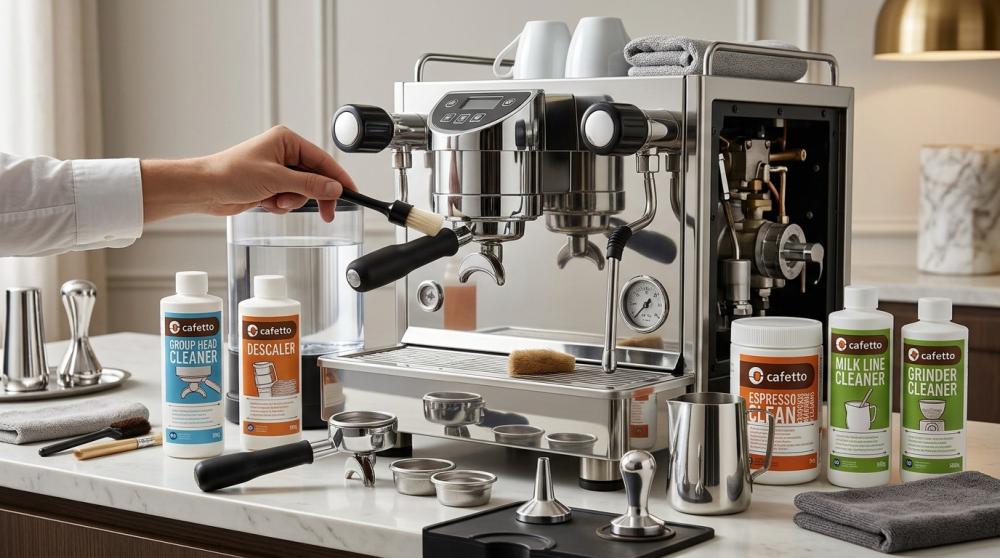
Let's say you have an espresso machine worth thousands of riyals, premium quality specialty coffee beans, and a skilled barista. Yet, the espresso comes out with a strangely bitter taste, as if there's something out of place in the cup. The problem isn't the coffee or the barista. The problem lies inside the machine: old, oxidized oils clinging to the components, limescale buildup obstructing the water flow, and milk residue that has turned into a breeding ground for bacteria in the steam wand. Ironically, most café owners clean the machine "generally," using one product for everything or nothing at all. The truth is, each part of the machine has a different enemy, and each enemy requires a suitable cleaner. In this guide, we'll explain which cleaner to use for each part , focusing on Cafeto products, well-known among coffee professionals.
Why is cleaning your coffee machine not a luxury?
Regular cleaning is not just about a clean appearance; it's a direct investment in three things:
- The taste of the cup: Old oils give a bitter and rancid taste that spoils even the best specialty coffee .
- Machine lifespan: Limescale deposits are one of the most common causes of machine failures, and the cost of repairing them is much higher than the cost of prevention.
- Customer safety: Milk residue and moisture create a suitable environment for bacteria growth, and cleanliness is part of the place's reputation.
In Saudi Arabia, where water quality affects the accumulation of sediment, regular maintenance becomes even more important.
Who is Cavito?
Cafeto is a brand specializing in cleaning products for coffee machines and related equipment, used by baristas and cafes worldwide. It stands out because it offers products tailored to each part of the machine, rather than a single, general product – a principle considered essential for proper maintenance.
Below we will review the basic parts and what each part is suitable for in different types of detergents.
First: The preparation group head and filters: Oil cleaner
The problem
Every espresso leaves behind oils and coffee grounds in the grouper, filter basket, and portafilter. Over time, these oils oxidize and turn into a black, sticky layer that imparts a bitter taste and restricts water flow.
the solution
For this purpose, a machine cleaner specifically designed to remove coffee oils is used , which is often a powder or tablets used in the backflush process using a blind basket filter. The kit also includes soaking the portafilter and filters in the cleaning solution.
How do you use it?
- Place the blind filter in the portafilter.
- Add the detergent in the amount recommended by the manufacturer.
- Run the backwash cycle several times as instructed.
- Rinse thoroughly by running cycles with clean water until all traces of detergent are gone.
- Soak the portafilter and filters in the solution for the recommended time, then rinse them.
Note: Always follow the instructions written on the package and in your machine's manual, as some machines have special requirements for backwashing.
How many times?
Backwashing with water is usually recommended daily, and with chemical detergent periodically weekly for intensive commercial use, with the frequency adjusted according to the number of cups.
Second: Steam Lance and Milk Jug: Milk Cleaner
The problem
Milk is the most formidable opponent. Its residue accumulates inside the steam pipe and in the nozzles, turning into solid deposits and unpleasant odors, and may clog the steam vents and weaken the steaming power.
the solution
Milk Frother Cleaner is specially designed to dissolve accumulated milk proteins and fats, whether in the steam lance, steaming jug, or automatic milk systems.
How do you use it?
- Wipe the steam lance with a clean, damp cloth after each use and release the steam to empty the tube.
- At the end of the day, dip the end of the lancet into the cleaning solution according to the product instructions.
- Rinse thoroughly with clean water before the next use.
- Clean the milk jug with the solution if necessary, then rinse it.
For automatic machines that have an internal milk system, make sure to follow the manufacturer's method for the milk cleaning cycle.
Third: Pipes and boiler: Limescale remover
The problem
City and well water contains salts and minerals that can deposit inside boilers, pipes, and heaters. This reduces heating efficiency, weakens pressure, damages internal parts, and may cause the machine to stop working completely.
the solution
A descaler is a product designed to dissolve limescale and accumulated minerals. It's crucial to note that you should only use a descaler if your machine is compatible . Some machines require a specific procedure or to be performed by a qualified technician, and some acidic descalers are not suitable for all parts.
Important tips
- Always refer to the machine manual before any descaling operation.
- Do not mix different cleaning products together.
- Rinse the system thoroughly with clean water after the process.
- Install a suitable water filter to reduce sediment buildup from the start; prevention is cheaper than cure.
How many times?
This depends on the water hardness and frequency of use, and is often done periodically every few months. It's best to have the water quality checked to determine the appropriate schedule.
Fourth: The mill: Mill cleaner
The problem
The grinder is the beating heart of the cup, and coffee oils and residues accumulate on the burrs and in the grinding path, giving an aged taste and affecting the consistency of the grind.
the solution
Grinding mill cleaner usually comes in the form of granules or tablets that are ground like coffee beans, absorbing oils and residues and cleaning the path without the need to completely disassemble the grinder.
How do you use it?
- Empty the remaining grain from the hopper.
- Grind the recommended amount of detergent.
- Then grind a small amount of coffee to get rid of the residue.
- Get rid of this first batch of coffee and don't serve it to customers.
In addition to the cleaner, use the grinder brush to remove dust and residue from places that the cleaner cannot reach.
Fifth: Daily tools: Brushes and accessories
Cleanliness isn't achieved with chemical cleaners alone. There are small, everyday tools that are indispensable:
- Kit brush: For cleaning the kit edges and gaskets after each service.
- Portafilter brush: To remove debris from the openings.
- Microfiber cloths: for wiping steam lances and surfaces.
- Blind Basket: The essential backwashing tool.
Suggested table: Which cleaner for which part?
Part
The problem
The right cleaner
Approximate frequency
The group and filters
oxidized oils
Engine cleaner (Backflush)
Depending on usage, usually weekly
Lance Steam
leftover milk
Milk cleanser
daily
boiler and pipes
Calcareous deposits
Descaling agent
Every few months, depending on the water.
The mill
Oils and coffee grounds
Mill cleaner
Depending on usage, usually weekly
Tools
Dust and debris
Brushes and fabric
After each service
Suggested cleaning routine for a cafe
daily:
- Wipe the steam lance after each use and release the steam.
- Backwash with water and clean the filters and portafilter.
- Wipe down the surfaces and the drain tray.
weekly:
- Backwash with chemical detergent and soak the filters.
- Clean the grinder with the appropriate cleaner.
- Cleaning the milk jug and equipment.
Monthly or periodically:
- Check the gaskets and filters and replace any that are damaged.
- Sediment removal according to water quality and company instructions.
- Check the water filter and replace it on schedule.
Common mistakes in cleaning coffee machines
- Use one cleaner for everything: each part has its own problem and cleaner.
- Neglecting to rinse: detergent residue spoils the taste and may be harmful to health.
- Increase the quantity: Use only the recommended amount, as more does not mean greater cleanliness.
- Ignore the machine manual: Every machine has its own specific characteristics, and adhering to the manufacturer's instructions is the basis of maintenance.
- Postponing the cleaning: What can be easily removed today may require a technician tomorrow.
Coffee luxury: Everything you need for a clean machine and a perfect cup
Maintaining your coffee machine is an essential part of making good coffee, and Coffee Luxury understands that. We provide coffee supplies and cleaning and care products for cafes, businesses, and homes throughout the Kingdom, along with specialty coffee and the tools you need to bring out the best in every bean.
With the luxury of coffee you get:
- Cleaning and maintenance products for coffee machines, grinders and milk systems.
- Everyday tools and accessories for the barista.
- Reliable quality suitable for commercial and home use.
- Delivery within the Kingdom and assistance in choosing the right product for your machine.
Browse our premium coffee products now and protect your investment in your machine, so that every cup stays as it should be.
Frequently Asked Questions
How often should an espresso machine be cleaned?
A simple daily cleaning should be performed, including backwashing with water, wiping the steam lance, and cleaning the filters. Chemical cleaning of the unit is typically carried out weekly for intensive commercial use, and the frequency is adjusted according to the number of cups and the manufacturer's recommendations.
What is the difference between engine cleaner and descaler?
Machine cleaner removes oils and coffee residue from the group and filters, while descaling agent dissolves limescale and mineral buildup inside the boiler and pipes. They are two different products and neither can replace the other.
Should I use the same cleaner for the grinder and the machine?
No. Grinding mill cleaner is for the blades and grinding track, while machine cleaner is for the assembly and filters. Each has a formula suited to its function.
How do I clean my steam cleaner properly?
Wipe it with a clean cloth after each use and release steam to empty the tube, then clean it with milk detergent at the end of the day and rinse it thoroughly with clean water.
Does regular cleaning actually improve the taste of coffee?
Yes. The accumulation of old oils and milk residue is one of the main causes of bitterness and rancid taste in the cup, and regular cleaning preserves the coffee's flavor and reveals its quality.
What is the importance of a water filter in engine maintenance?
The filter reduces the minerals and salts entering the machine, thus limiting limescale buildup, extending the life of the boiler and pipes, improving the taste of the coffee, and reducing the need for frequent descaling.
Can I use general household cleaners to clean my coffee machine?
This is not recommended. General cleaners may leave residue or odors, or damage gaskets and internal parts. Use products specifically designed for coffee machines and follow the manufacturer's instructions.
Where can I find coffee machine cleaning products in Saudi Arabia?
You can browse coffee luxury products, where you will find coffee supplies, care and cleaning products with delivery within the Kingdom.