
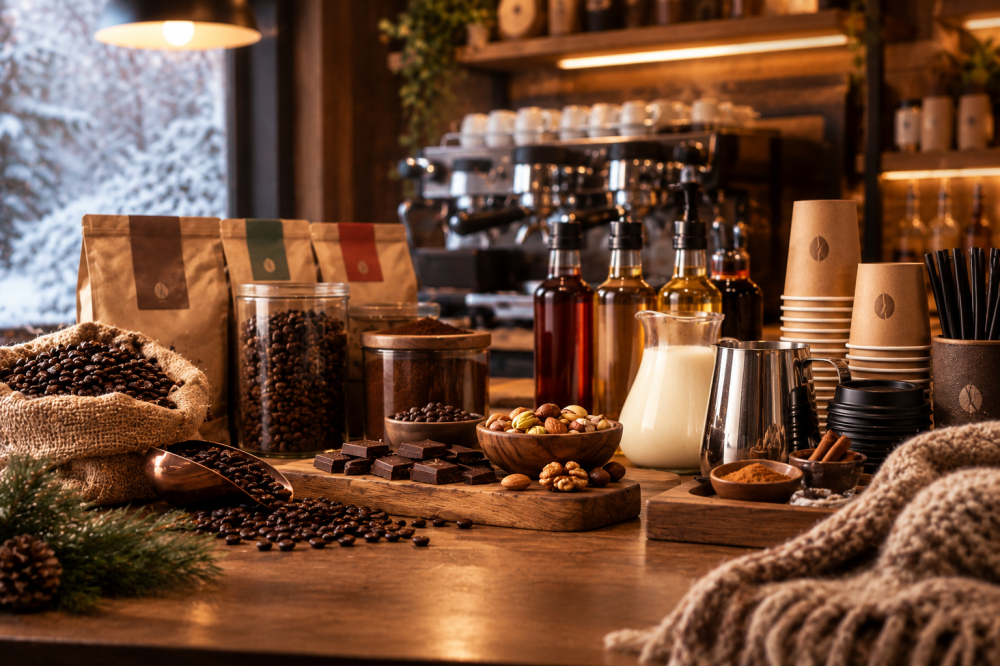
On the first cold night of the season, something every café owner knows happens: the customer base changes even before the weather does. Orders for ice cream and cold drinks gradually disappear, and the line at the cashier begins with phrases like, "I need something warm," "Do you have mocha?" and "What do you have with cinnamon?" Surprisingly, successful café owners don't wait for this night. They stock up weeks in advance because those who catch on to the season late find their suppliers have already run out, and their competitors have preemptively prepared their winter menus. So, how do you stock your café before December? And what products should always be on your shelves? This practical guide will answer those questions.
Why is winter the peak season for cafes in Saudi Arabia?
With temperatures dropping across most of the Kingdom, the demand for hot beverages increases significantly. Outdoor gatherings become more common in the milder weather, and family get-togethers and evening outings become more frequent, leading to a rise in the average demand for drinks and sweets.
But this opportunity has another side: greater operational pressure, higher consumption of milk, coffee, and sauces, and fiercer competition for customers. Therefore, advance inventory planning is the difference between a profitable season and one filled with shortages and losses.
First: Coffee beans and specialty coffee
This is the heart of the menu. In winter, customers tend to prefer warm flavors and fuller bodies, so be sure to provide:
- Medium to medium dark roast espresso beans: tolerate milk and show chocolate, caramel and nut flavors, and are the basis for lattes, mochas and cappuccinos.
- Ben for drip coffee (V60 and Chemex): For specialty coffee lovers who appreciate a clean cup.
- Ben for Saudi and Arabic coffee: Demand for it increases in winter with gatherings and hospitality.
- Decaf option: For evening customers, as winter nights are long.
Important tip: Accurately estimate your weekly consumption based on last year's season, and add a safety margin of about 20% for peak demand, taking care not to store more than you consume in a few weeks, because roasted coffee loses its freshness over time.
Second: Milk and its alternatives
Milk is the king of winter drinks, and also the biggest potential waste item if not managed properly. Prepare:
- Whole milk: Best for steaming and making creamy foam.
- Skimmed or low-fat milk: For diet customers.
- Plant-based alternatives: oat, almond, and coconut milks are in ever-increasing demand.
- Evaporated and condensed milk and cooking cream: for special winter drinks, and their uses vary among drinks.
Remember that long-life varieties are easier to store, while fresh produce requires a precise weekly supply schedule.
Third: Sauces, syrups, and flavorings
Here, the café transforms from a place to sell coffee into a place to sell an experience. Its most important offerings include:
- Chocolate sauce: Most consumed in winter, it is the basis of mocha and hot chocolate.
- Caramel sauce and salted caramel: accompany lattes, iced drinks and desserts.
- Hazelnut, almond and vanilla syrup: classic flavors that never lose their audience.
- Seasonal drinks: cinnamon, ginger, spices, and gingerbread are the stars of the winter menu.
- Date syrup or date sauce: a local flavor that is widely accepted in Saudi Arabia.
Fourth: Chocolate powders and hot drinks
Hot chocolate is an essential winter drink, especially for families and children. Make sure to stock up on:
- High-quality hot chocolate powder.
- Dark cocoa powder for drinks and decoration.
- Matcha powder and tea lattes to expand the menu.
- Masala tea powder (Karak tea) that achieves excellent sales in cold weather.
- Tea bags and herbs such as ginger, cinnamon, mint and chamomile.
Fifth: Accessories and Add-ons
Small details are what create the mental image of the place, and they are also what raise the value of the cup in the eyes of the customer:
- Ground cinnamon and sticks , and coffee spice.
- Marshmallows for hot chocolate.
- Whipped cream and cream sprays.
- Sprinkles of cocoa and grated chocolate.
- Brown sugar, stir sticks, and sweeteners.
Sixth: Cups and packaging
Winter is also the season for takeaway orders, so don't neglect it:
- Thermally insulated paper cups in various sizes to keep your drink hot.
- Airtight covers , as spillage in cold weather is a nuisance to the customer.
- Cup and paper bag holders.
- Ceramic and heat-resistant glass cups for elegant indoor seating arrangements.
Seventh: Pre-peak equipment maintenance
It is not enough to store the products; you must ensure that your equipment is able to withstand the pressure:
- Espresso machine: Clean the group heads, check the gaskets and filters, and replace any that are damaged.
- Grinder: Check the burrs and adjust the grind, as worn burrs spoil the quality of the espresso.
- Water purifier: Change the filters on schedule to protect the machine and the quality of the cup.
- Refrigerators: Make sure they are efficient for storing milk and sweets.
- Barista tools: such as the tamper, milk jug, and scale; check that they are ready.
Remember that a breakdown in your espresso machine during peak hours can cost you much more than a simple preventative maintenance.
Suggested timeline for setting up the cafe
- Six weeks before December: Finalize your winter list and review last season's sales.
- 4 weeks in advance: Order basic quantities of coffee, sauces and long-term supplies.
- 3 weeks prior: Perform preventative maintenance on the equipment and try out your new drinks.
- Two weeks in advance: Train your team on the new recipes and prepare the marketing materials.
- One week ago: Launch the winter menu and announce it on your accounts.
Common mistakes to avoid
- Excessive storage: leads to waste and expiration.
- Limited storage: This puts you in a position of shortages at the height of the season.
- Neglecting prior testing: Launching a new beverage without thoroughly testing and pricing it.
- Ignore the cost calculation: Every winter drink needs an accurate calculation of the cost of its ingredients so that it does not eat into the profit margin.
- Order delay: Late orders mean higher prices or shortages in quantities.
Coffee luxury: Your partner in preparing for the winter season
If you want to enter winter with a fully stocked inventory and a ready menu, our coffee luxury service makes it easy. We offer a wide selection of specialty coffees from various origins and roasts, in addition to all the coffee- related supplies every café needs: from sauces, syrups, and hot beverage powders to tools, accessories, and operational equipment.
With the luxury of coffee you get:
- A diverse range of products covering all winter menu needs.
- Reliable quality suitable for cafes, commercial projects and homes.
- Assistance in choosing the right products for the nature of your project.
- Delivery within the Kingdom saves you time and effort.
Don't wait until stocks run out, browse our coffee luxury products now and get your coffee shop ready for a season worth preparing for.
Frequently Asked Questions
When should I start preparing the cafe for the winter season?
Ideally, you should start 4 to 6 weeks before the season begins, ideally in October or early November for those planning for December. This gives you time to review sales, order quantities, test new drinks, and train your team.
What are the most important products that should be stored before winter?
The basics are espresso and specialty coffee beans, milk and milk alternatives, chocolate and caramel sauces, seasonal flavored syrups, hot chocolate powder, and insulated cups. Additional toppings include cinnamon, marshmallows, and whipped cream.
What are the most popular drinks in cafes during winter?
Demand typically increases for mocha, latte, hot chocolate, Karak tea, and drinks flavored with cinnamon, spices, and hazelnut, in addition to drip coffee and Arabic coffee. Priorities vary from region to region and from one consumer group to another.
How much coffee should I store for the season?
Based on your average weekly consumption from the previous season, add a margin of approximately 20% for peak demand. Store no more than a few weeks' worth of roasted coffee to maintain freshness, and reorder in batches.
Do I need plant-based milk alternatives in the winter menu?
Yes, the demand for oat, almond and coconut milk is increasing, and having them expands your customer base and increases sales opportunities, especially for those who avoid lactose or prefer plant-based options.
How can I avoid wasting milk and ingredients during peak season?
Adopt an accurate weekly supply schedule, train the team on correct measurement, use appropriately sized containers, apply the "first in, first out" principle in storage, and review consumption weekly to adjust quantities.
Is equipment maintenance necessary before the start of the season?
Yes, preventative maintenance is far less expensive than dealing with a sudden breakdown during peak season. Check your espresso machine, grinder, water filters, and refrigerators weeks before the season begins.
Where can I find cafe and specialty coffee supplies in Saudi Arabia?
You can browse our coffee luxury products, where you will find specialty coffee, cafe supplies and various beverages with delivery within the Kingdom.