
In the rapidly growing world of specialty coffee , flavor recognition has become both an art and a science, combining sensory experience and intellectual knowledge. With coffee culture flourishing in the Arab world, where specialty coffee consumption exceeds millions of cups daily, coffee lovers seek an experience that goes beyond simply drinking a cup. Coffee possesses an incredible diversity of flavors, making their differentiation an essential skill for café owners, baristas, and consumers alike, ultimately enhancing product quality and brand value.
In this article, we will review how to distinguish flavors Learn to make coffee like a pro with this comprehensive guide covering tools, steps, and influencing factors. We'll focus on the coffee flavor wheel as a key tool, providing practical examples and tips for beginners. We'll also address frequently asked questions and highlight how " Coffee Luxury " can be your ideal source for the finest flavors through its extensive range of specialty coffees , suitable for both cafes and personal use. The goal is to transform your coffee experience into a pleasurable and enriching sensory journey.
Understanding the coffee flavor wheel: The essential tool for professionals
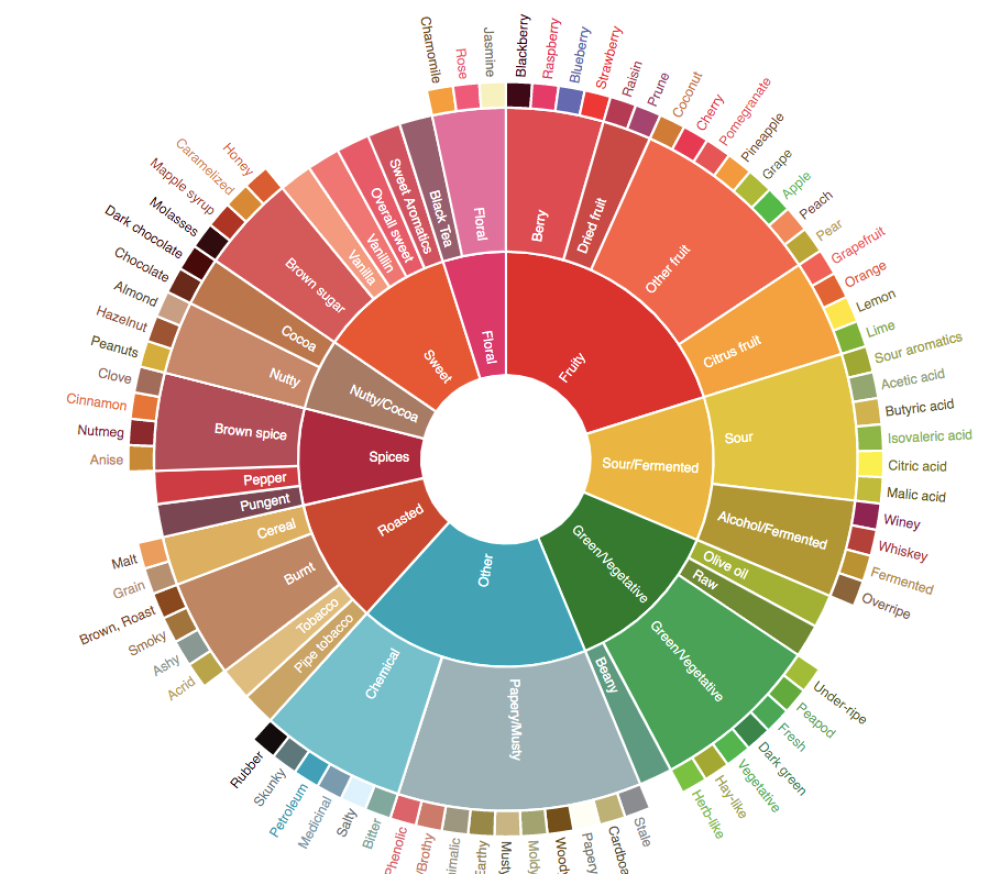
A coffee flavor wheel is a visual map that helps to systematically classify and distinguish flavors. Starting in the center with general categories like "fruits" or "spices," the wheel then branches out to more specific descriptions outwards, such as "blueberry" or "cinnamon." This wheel transforms taste from intuition to science, helping coffee shop owners select the right coffee for their customers.
To use it, start by tasting the coffee and identifying the general category: Do you perceive fruity acidity or chocolatey sweetness? Then move on to the details. For example:
- The main categories include "fruits" (such as citrus fruits or berries), "flowers" (such as jasmine), "spices" (such as cloves), "nuts" (such as almonds), and "sweets" (such as caramel).
- Specific examples : In Ethiopian coffee , "lemon" might stand out from the citrus category, while in Colombian coffee , "dark chocolate" stands out from the dessert category.
This wheel makes tasting a structured experience, helping to accurately describe flavors and increasing customer satisfaction.
Read also: What are the names of specialty coffee tools?
Professional Tasting Steps: A Step-by-Step Guide
To taste coffee Like the professionals, follow a process called "cupping," which is used by international coffee evaluation associations. Here are the detailed steps:
- Preparation : Choose freshly ground coffee (coarsely ground, like sea salt). Use 8.25 grams per 150 ml of hot water (93°C). Let it steep for 4 minutes without stirring.
- Fragrance/Aroma Assessment : Smell the coffee dry first, then after pouring. Dry aromas reveal the roast, while moist ones highlight the base notes. Do you smell flowers or nuts?
- Initial tasting (Flavor) : Take a large slurp to spread the coffee across your tongue. Focus on the flavors: acidity like lemon makes your mouth water, while bitterness is like dark chocolate.
- Body assessment : The sensation of coffee in the mouth, from light like tea to thick like whole milk.
- Aftertaste : What remains after swallowing. Is it long and sweet, or short and dry?
- Balance and complexity : Do the flavors harmonize? Good coffee has multiple layers, such as a transition from fruit to chocolate.
Practicing these steps regularly, especially with side comparisons between different types, develops the senses quickly.
Factors affecting coffee flavors
Flavors don't come about randomly; they are the result of multiple factors:
- Origin : Ethiopian coffee is rich in tropical fruits due to the high altitudes, while Brazilian coffee is nutty thanks to the fertile soil.
- Processing : Wet processing enhances acidity, while dry processing adds ripe fruit flavors.
- Roasting : Light roasting preserves the original flavors, while dark roasting adds smokyness.
- Grinding and preparation : Fine grinding increases extraction, bringing out additional flavors.
Understanding these factors helps in choosing the right coffee for each occasion.
You might like: 10 questions you should ask your specialty coffee supplier before buying
Practical examples of flavor differentiation
Let's put this into practice: In Kenyan coffee, the acidity of blackberries might be highlighted with a floral note, while in Indonesian coffee, spices like cinnamon stand out with a richer body. Try comparing Arabica and Robusta coffees : the former is complex and fruity, the latter is stronger and earthier.
The most frequently asked questions about distinguishing coffee flavors
Based on the experiences of coffee lovers, here are the frequently asked questions:
- How do I start tasting coffee if I'm a beginner? Start with the flavor wheel and taste different types side by side.
- What is the difference between flavor and smell? Smell is what you smell, while flavor includes taste and sensation.
- Can the senses be developed? Yes, with daily practice and training.
- Why do flavors differ in the same type? Because of origin, processing, and roasting.
- How can I avoid common mistakes? First, avoid cold coffee or coffee mixed with sugar.
- What's the best tool for beginners? The flavor wheel, available for free online.
- How do I choose a good coffee to taste? Choose from trusted sources such as " Coffee Luxury ".
Coffee luxury: Your source for the finest flavors
For the finest coffee flavors, choose from the extensive " Coffee Luxury " range, which includes varieties from Ethiopia (fruity), Colombia (chocolate), and Indonesia (spicy). As a specialized Saudi establishment, " Coffee Luxury " offers freshly brewed coffee with precise flavor recipes, along with consultations for café owners to select the most suitable blends. With regular promotions and fast delivery, you can easily distinguish flavors and elevate your business or personal experience.
Distinguishing coffee flavors like a pro is a skill that can be acquired with practice and the right tools, opening new doors to enjoyment and commercial success. Start today with the Flavor Wheel and the steps to capping, and explore the " Coffee Luxury " range of top choices. With this skill, you'll transform every cup into a unique flavor story.