
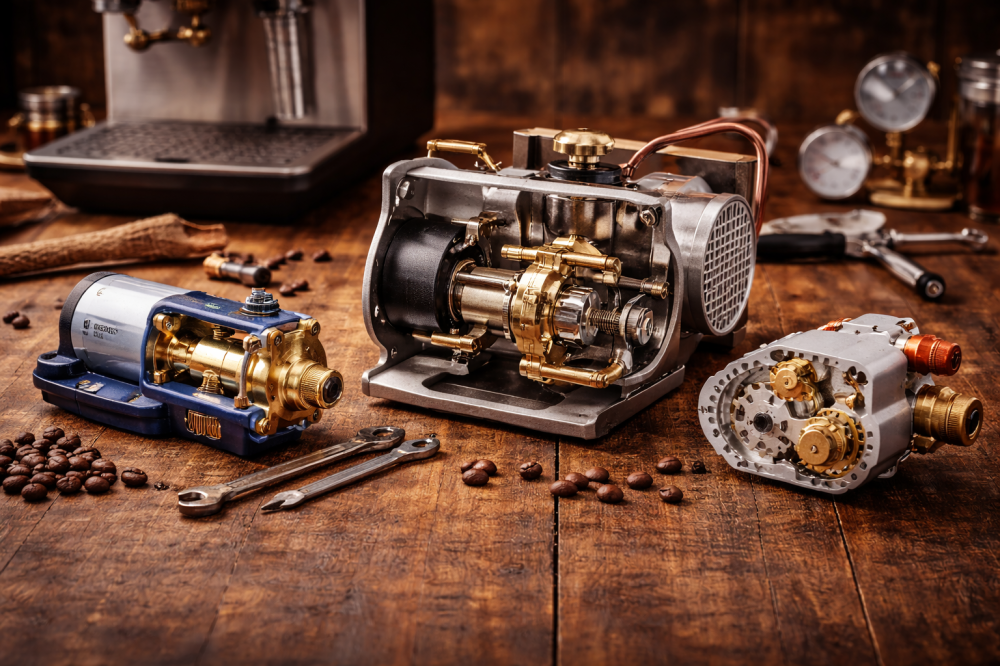
At the heart of every espresso machine, whether for home or commercial use, lies a crucial component called the pump . Without it, the high pressure (around 9 bar) necessary to extract the perfect espresso—characterized by a rich crema, balanced flavor, and natural sweetness—cannot be achieved. The pump is the machine's "heart," transforming water from a reservoir or external source into pressure that forces hot water through the finely ground coffee with power and precision.
In this detailed article from Coffee Luxury , we will explain in detail what a coffee machine pump is, how it works, and its most prominent types along with the advantages and disadvantages of each type.
What is the function of a coffee machine pump?
The pump is the part responsible for generating the pressure needed for the extraction process. In espresso, the pressure must reach 9 bar (sometimes it starts higher and then stabilizes) for the hot water (92-96 degrees) to pass at the appropriate speed through the pressurized coffee, extracting the oils and flavors without excessive bitterness.
Without a powerful and stable pump:
- The extraction becomes weak (pale coffee).
- Channeling (uneven flow) may occur.
- A rich cream (crema) does not form.
The pump works with the heating system (boiler or thermoblock) to ensure a constant flow of hot water under pressure.
Main types of coffee machine pumps
The pumps commonly used in espresso machines fall into two main categories, with other types less common in specialized applications:
1. Vibratory Pump (or Solenoid Pump)
This is the most common type in home machines (such as Breville, De'Longhi, Gaggia Classic, Profitec Pro 300 in some versions).
How does it work?
It relies on an electromagnetic coil (solenoid) that moves a piston back and forth at high speed (about 50-60 times per second). This vibration propels the water forward.
Advantages:
- Small size and lightweight.
- Low price (replacement cost is cheap).
- Easy to maintain and install.
- Suitable for small tanks (no strong water line pressure required).
flaws:
- Louder sound (clear vibration).
- The pressure is not completely stable (it fluctuates slightly during extraction).
- Shorter lifespan (5-7 years with daily use).
- Relatively slower flow (approximately 6-8 ml/second).
Suitable for: Beginners and everyday home use (1-4 people). Most home espresso machines under £2000-£3000 use this type.
2. Rotary Pump (or Rotary Vane Pump)
This type is most commonly used in professional and commercial machines , and in some high-end home machines (such as some E61 grouphead machines).
How does it work?
It relies on an electric motor that rotates vanes inside a chamber, pushing water continuously and smoothly.
Advantages:
- More stable and consistent pressure (better for consistent extraction).
- A much quieter voice.
- Higher and faster flow (approximately 10-12 ml/second or more).
- Longer lifespan (10 years or more with maintenance).
- Suitable for direct connection to the water network (plumbed-in).
flaws:
- Larger and heavier.
- Much higher price (replacing it is expensive).
- It requires more thorough periodic maintenance.
- Best performance when connected to a water network (an additional pump may be needed if from a tank).
Suitable for: Cafes, heavy daily use, or espresso lovers who want professional quality at home.
3. Other less common types
- Gear pump : Used in some very advanced machines, it gives better control over flow and pressure.
- Magnetic or diaphragm pump : Rare, used in some modern designs to reduce noise.
- Manual pump (Lever Machines) : In traditional machines such as La Pavoni, the user generates the pressure manually without an electric pump.
Tips for choosing a machine based on pump type
- For beginners or on a limited budget : choose a machine with a vibratory pump (such as the Gaggia Classic or Breville Barista Express).
- For lovers of professional quality : Look for a machine with a rotary pump (such as some Profitec or Rocket).
- Pump maintenance : Clean the machine regularly to prevent the buildup of deposits (limescale) that can affect the pump. Use good quality water filters.
- In Egypt : Make sure spare parts for the pump type are available before purchasing.
Frequently asked questions about coffee machine pump
- Can a vibratory pump be replaced with a rotary one? Usually not, because the internal design is different.
- Which type is best for the home? Vibratory ones are sufficient and cheaper, but rotary ones are better if you use them a lot.
- Does the sound affect the quality of the coffee? No, the sound does not affect it, but it does affect the comfort during use.
- How long does the pump last? Vibratory pumps last 5-7 years, rotary pumps last much longer with maintenance.
- Do all espresso machines need a pump? Yes, except for manual (lever) machines that rely on hand strength.
At Coffee Luxury , we offer the finest home and professional espresso machines equipped with high-quality pumps – from economical vibratory to professional rotary – guaranteeing compatibility and optimal performance. Whether you're looking for a simple machine for everyday use or a high-end machine to achieve professional espresso at home, you'll find the right options with genuine spare parts and free technical advice.