
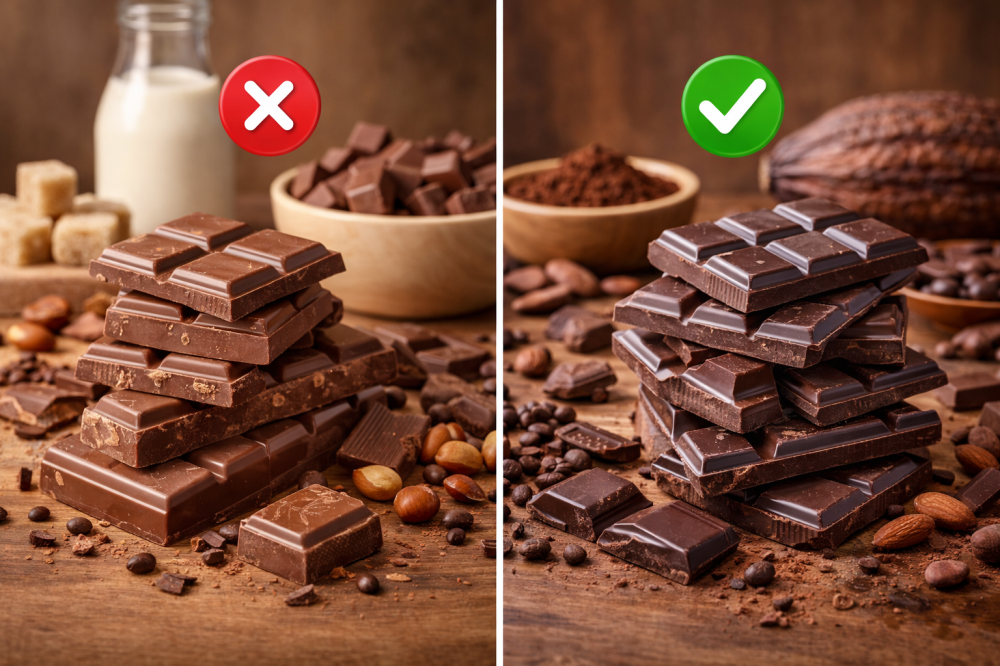
In the world of gourmet foods, chocolate is one of the most popular products, but when it comes to health, a common question arises: Which is healthier, milk chocolate or dark chocolate ? This question isn't just a matter of everyday curiosity; it's the subject of scientific debate based on numerous studies that reveal the differences in nutritional composition, health benefits, and potential risks of each type. Dark chocolate, which contains a high percentage of cocoa (70% or higher), often wins the health title thanks to its richness in antioxidants like flavonoids, which support heart health, improve blood circulation, and reduce inflammation. Milk chocolate, on the other hand, which contains a lower percentage of cocoa (25-40%) and higher amounts of sugar and milk, may be less beneficial and more likely to lead to weight gain or elevated blood sugar. However, the difference isn't absolute, as it depends on the quantity consumed, the quality of the product, and individual health conditions. In this detailed article, we'll explore the differences between the two types from nutritional and scientific perspectives, explaining the benefits and risks, recommended amounts, and tips for making a healthy choice. We'll also cover the most frequently asked questions on the topic to help you make an informed decision that suits your lifestyle. If you are looking for “ Which is healthier, milk chocolate or dark chocolate ” or “The benefits of dark chocolate versus milk chocolate”, this article will be your comprehensive guide to understanding the difference and achieving a healthy balance, based on reliable scientific studies to ensure the accuracy of the information.
Cocoa content and active compounds: the main difference between the two types
When comparing which is healthier, milk chocolate or dark chocolate , the cocoa content is a crucial factor. Cocoa contains potent compounds like flavonoids (catechins and epicatechins), which act as powerful antioxidants. Dark chocolate has a much higher cocoa content (70-90%), making it rich in these compounds, while milk chocolate contains only 25-40% cocoa and has significantly less flavonoids (sometimes less than 20% of the amount found in dark chocolate). This difference makes dark chocolate better at improving blood flow, slightly lowering systolic blood pressure, and reducing chronic inflammation, as shown in large studies published in the Cochrane Review. For example, consuming 30 grams of dark chocolate daily can improve blood vessel function and reduce the risk of heart disease, while milk chocolate does not provide the same effect due to its lower cocoa content. However, if dark chocolate contains a lot of added sugar, this may diminish its benefits, making the choice dependent on carefully reading the labels.
Sugar and calories: The risks of excessive consumption of both
In the debate about which is healthier, milk chocolate or dark chocolate , sugar plays a major role. Milk chocolate contains significantly more sugar (45-55 grams per 100 grams), making it more likely to contribute to weight gain and elevated blood sugar levels, while dark chocolate contains less sugar (20-30 grams or less). The calorie count is similar (530-600 calories per 100 grams), but the type of fat differs: dark chocolate relies on cocoa butter (naturally saturated fats that have a neutral effect on cholesterol), while milk chocolate adds milk fat (more saturated fat). This difference makes dark chocolate a better choice for diabetics or those watching their weight, as it raises blood sugar more slowly and is more satiating due to its bitterness, thus reducing the amount consumed. Studies, such as those published in the New England Journal of Medicine, have shown that excessive milk chocolate consumption increases the risk of obesity and type 2 diabetes, while dark chocolate in moderation may help with weight management when incorporated into a balanced diet.
Health benefits of each type: Darker skin wins in most aspects
When answering the question of which is healthier, milk chocolate or dark chocolate , the health benefits of dark chocolate stand out. Studies from Harvard Health have shown that it improves heart health by reducing inflammation and enhancing blood flow. It also improves brain function and short-term memory thanks to increased blood flow to the brain, and reduces the risk of neurodegenerative diseases. Milk chocolate, while containing more calcium than milk, loses most of these benefits due to its high sugar content, which hinders nutrient absorption. However, milk chocolate might be better for those with severe calcium deficiency, but other sources like yogurt are preferable. Dark chocolate also improves mood by releasing endorphins, but this effect is partly psychological due to its delicious taste.
Risks and recommended amounts: Moderation is key to health
In the debate about which is healthier, milk chocolate or dark chocolate , the risks must be considered. Excessive consumption of dark chocolate can disrupt sleep due to caffeine (80 mg per 100 grams) or expose you to heavy metals like cadmium in some cheaper varieties. Milk chocolate is more likely to contribute to weight gain due to its sugar and fat content. Recommended amounts: 20-40 grams per day for dark chocolate (2-4 squares), and less than 20 grams for milk chocolate. Opt for organic to minimize these risks.
Tips for making the right choice between the two types
To maximize the benefits of choosing between milk and dark chocolate, opt for dark chocolate with 70% cocoa or higher. Read labels to avoid added sugar and incorporate it into a balanced diet. For children, start with small amounts of dark chocolate (65-70%) to avoid caffeine.
Frequently asked questions about which is healthier, milk chocolate or dark chocolate?
- Does dark chocolate raise cholesterol? No, quite the opposite – studies show that it does not raise bad cholesterol (LDL) and may slightly improve the ratio of good (HDL).
- Can a diabetic patient eat dark chocolate? Yes, in moderate amounts (20-30 grams) and with a cocoa content of 70% or higher, because it raises blood sugar much more slowly than milk chocolate.
- Does dark chocolate really help with weight loss? It doesn't directly cause weight loss, but it may help indirectly because it is more satiating and reduces cravings for sugary sweets.
- What is the safe upper limit for dark chocolate per day? Most studies show that 30-50 grams per day of dark chocolate (70%+) is safe and beneficial for most healthy adults.
- Can children eat dark chocolate? Yes, in very small quantities (10-20 grams) if the cocoa content is not too high (65-70%), because caffeine and theobromine may affect children more.
Discover high-quality dark chocolate with the luxury of coffee
At Coffee Luxury, we offer a selection of premium dark chocolates and authentic Belgian chocolate chips (70-85% cocoa), perfect for enjoying on their own or blending with coffee in sophisticated drinks like mochas or lattes. Our products are free of added sugars and rich in antioxidants, making them an ideal healthy choice. Shop now.