
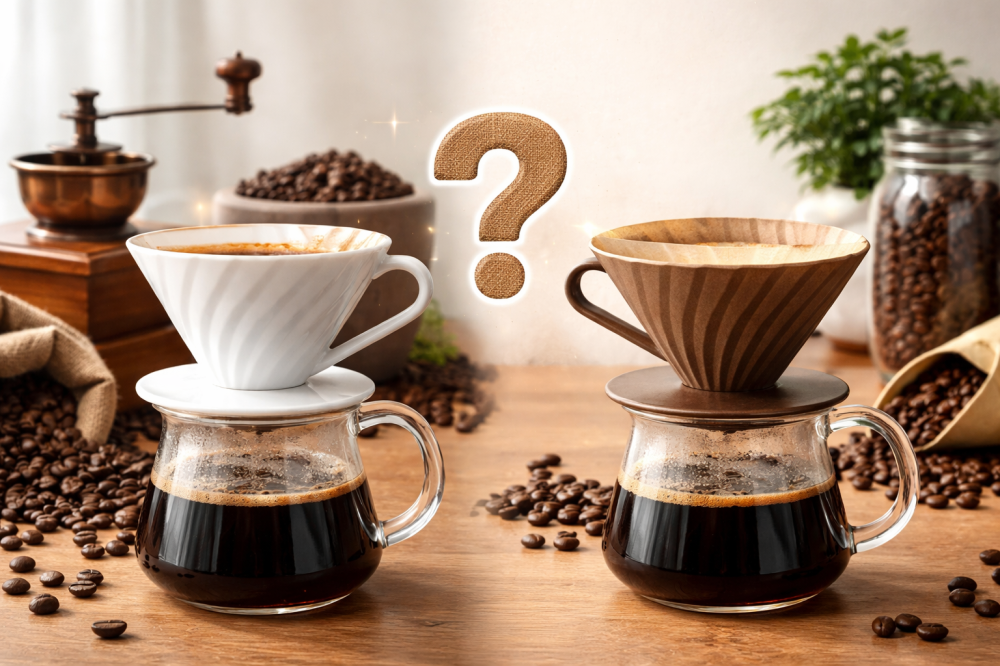
In the world of specialty coffee, the Hario V60 brewer is one of the most popular tools among home baristas and professionals alike. This is due to its unique design, which allows for precise control over the extraction process, resulting in a balanced and flavorful cup of coffee. However, choosing the right filters remains crucial, as it directly impacts the quality of the coffee. In this article, we'll explore the differences between white (bleached) and brown (unbleached) V60 filters in detail, focusing on aspects such as taste, environmental impact, use, and price. The aim of this article is to educate you to make an informed decision, incorporating the most searched terms on the topic, such as "V60 white vs brown filters," "bleached vs unbleached," "difference between white and brown coffee filters," "best V60 filters for taste," and "the effect of filters on specialty coffee." We'll also discuss how to incorporate these filters into your daily routine and conclude with frequently asked questions and a promotional section for the Coffee Luxury blog, which offers various coffee and beverage accessories, including hot chocolate.
V60 filters: The foundation of perfect coffee
Before delving into the details, let's remember that V60 filters are specifically designed for the V60 coffee maker, which has a 60-degree conical shape, allowing water to flow evenly through the ground coffee. These filters are made of high-quality paper and come in two main sizes: 01 (for 1-2 cups) and 02 (for 2-4 cups). The main difference between the white and brown types lies in the manufacturing process. Brown filters are unbleached, while white filters are bleached, often using an environmentally friendly oxygen bleaching process. This difference often raises questions among coffee lovers, especially with the proliferation of searches for "white vs brown V60 filters" and "pros and cons of bleached coffee filters."
According to coffee experts, such as those at Sweet Maria's and Driftaway Coffee, there's no fundamental difference in extraction quality if filters are thoroughly rinsed, but subtle differences in taste and environmental impact make the choice a personal one. In recent years, interest in eco-friendly filters has grown, making "unbleached V60 filters environmental impact" one of the most searched terms.
V60 white filters: The cleanest choice for taste
V60 white filters are the bleached version, often preferred by professional baristas for their pure taste. The bleaching process is typically done using oxygen bleaching, a safe and harmless method, unlike the chlorine bleaching that was common in the past and raised environmental concerns. This process removes the natural brown color of the paper, resulting in a brilliant white filter that minimizes any paper flavors from transferring to the coffee.
One of the main advantages of V60 white filters is:
- A cleaner, more refined taste : According to user reviews on Reddit and Home-Barista, white filters produce a clearer, more balanced coffee, especially with light roast specialty coffees. This makes them ideal for extracting fruit and citrus flavors without the papery aftertaste. In tests like those conducted by Prima Coffee, white filters showed up to a 50% reduction in papery aftertaste compared to brown filters.
- Easy to use : No intensive rinsing is required, although rinsing with hot water is always recommended to remove any residue. This saves time, especially on busy mornings.
- Price : Often cheaper than bulk, with a box of 100 filters costing around $5-7, depending on the region. This makes them an economical option for beginners in the world of specialty coffee.
However, there are drawbacks: bleaching, while now considered environmentally friendly, may raise concerns about its environmental impact, especially if the plants do not adhere to high standards. It may also be less sustainable than traditional building methods in some contexts.
V60 Filters: The natural and environmentally friendly choice
The V60 brown filters, on the other hand, are completely unbleached, preserving their natural brown color derived from the wood pulp. This type is favored by sustainability enthusiasts as it avoids any additional chemical processes. According to Melitta and Coffee Stack Exchange, brown filters are more environmentally friendly because they require less energy to produce.
Advantages of V60 filter structure:
- Positive environmental impact : Being unbleached reduces the use of chemicals, making it a greener option. Studies such as those published on TikTok and YouTube have indicated that brown filters reduce pollution by 20-30% compared to traditional bleach.
- Natural taste : Some users prefer it because it retains "authenticity," especially with dark roast coffee. However, it can impart a papery taste if not rinsed thoroughly, as noted in James Hoffmann's Facebook reviews.
- Durability : It is often thicker, which prevents tearing during preparation.
Disadvantages: The potential for a papery taste, requiring an intensive hot water rinse (approximately 200-300 ml). It can also be slightly more expensive, costing $6-8 per can, and flows more slowly if not prepared properly.
Tips for choosing the right filter and preparing coffee
For best results, always start by rinsing the filter with hot water to remove any residue. Use freshly ground, medium-coarse coffee and control the temperature (92-96°C). If you're a beginner, try both types to see the difference for yourself. These filters can also be combined with other drinks, such as hot chocolate; for example, the V60 can be used to make a thick hot chocolate by adding cocoa powder.
Frequently asked questions about V60 white and brown filters
- What is the main difference between white and brown V60 filters? The white ones are bleached with oxygen for a purer taste, while the brown ones are unbleached and more environmentally friendly.
- Are white filters safe for health? Yes, with oxygen bleaching, they do not have a negative effect.
- Do I need to rinse the filters before use? Yes, especially the structure to avoid a papery taste.
- Which is better for the environment? Brown filters, because they are less processed.
- Does the type affect the speed of preparation? White is faster if the brown is not rinsed well.
- How do I choose based on the type of coffee? White for light, brown for dark.
Promotional paragraph for coffee luxury
At Coffee Luxury, we are committed to providing the finest specialty coffee and beverage accessories to enhance your everyday wellness experience. Whether you're looking for white or brown V60 filters, or want to try premium hot chocolate made with organic cacao, we offer high-quality products at competitive prices.