
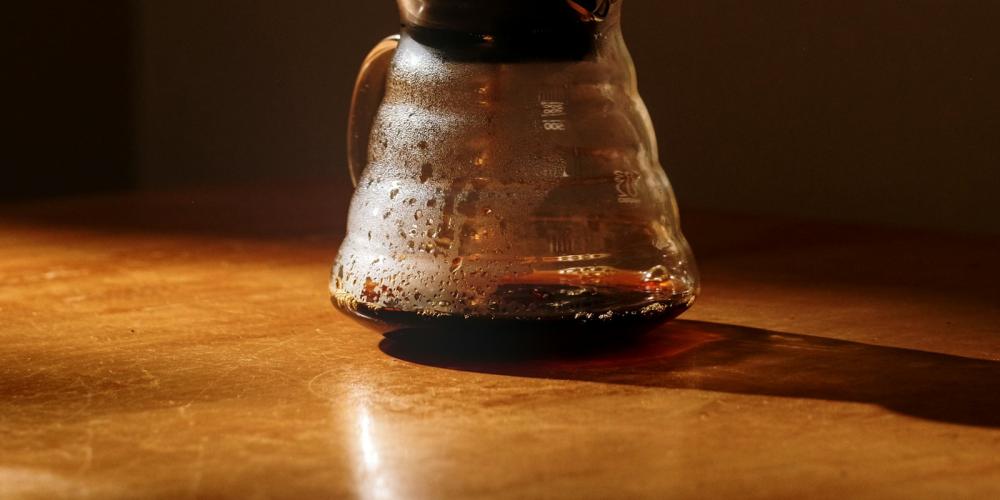
The problem might be with the coffee cup, but not with the coffee itself.
Have you ever used the same coffee beans, the same grinder, and the same brewing method, and then got a different taste each time? Once the coffee was balanced and sweet, another time it seemed bitter, and in a third experience its flavors disappeared completely?
Before you change the type of coffee or buy a new grinder, there is one essential element that often gets less attention than it deserves: water .
Yes, water that seems to have no distinct flavor can be one of the most important factors determining whether specialty coffee will reveal its beautiful flavors or appear bland, bitter, or harsh.
ﻻ
The matter does not stop at the quality of the water only, but the equation extends to the temperature of the water during preparation .
Water is the medium that extracts compounds and flavors from coffee beans, so changing its properties or temperature can change the result inside the cup.
Therefore, if you are interested in preparing specialty coffee at home or work in a cafe, understanding the relationship between water, temperature and extraction can help you achieve a more balanced and consistent cup.
In this guide from Coffee Luxury , we will explain how water affects the taste of coffee, what the right water specifications are, how to choose the brewing temperature, and what mistakes might make coffee bitter, sour, or weak.
Why does water affect the taste of coffee?
The coffee we drink is not just coffee powder to which water is added.
During preparation, water passes through the ground coffee beans and works to extract a range of soluble compounds.
These compounds are responsible for a large part of:
- Sweetness.
- Acidity.
- Gallbladder.
- The perfume.
- The texture.
- The distinctive flavors of coffee.
Therefore, when the water changes, the water's ability to extract these compounds may change.
This means that the same coffee can give a different taste when using different water .
This is why specialty coffee lovers care about the quality of the water as much as they care about the quality of the beans, the grinder, and the method of preparation.
What are the specifications of the water suitable for preparing specialty coffee?
The phrase "best water for coffee" does not simply mean water that is safe to drink.
The water suitable for preparing coffee must be balanced in terms of minerals and chemical properties, because the minerals in it can affect the extraction process.
One of the most important things to pay attention to is:
1. Taste and smell
If the water has a distinct taste of chlorine or an undesirable odor, these effects may transfer to the coffee.
Therefore, it is best to use clean water that is free of strange smells and flavors.
2. Minerals
Ultra-pure water is not always the best choice for extraction, and conversely, very hard water can also affect the result.
What is required is a suitable balance that allows coffee to be extracted properly without adding unwanted flavors.
3. Difficulty
Water hardness is mainly related to the presence of minerals such as calcium and magnesium.
The levels of minerals can affect the ability of water to extract different compounds from coffee.
4. Alkalinity
Alkalinity is related to the ability of water to neutralize acids.
This is particularly important when preparing specialty coffees with pronounced acidity.
If the alkalinity is too high, some acidic flavors may appear less pronounced.
Is filtered water better for coffee?
In many cases, using suitable filtered water can help improve the result, especially if the source water has a distinct taste or smell or a high percentage of certain minerals.
But the word "filtered" does not automatically mean that the water is now perfect for coffee.
The type of filter and the treatment method affect the final water composition.
Therefore, if you use a water filter at home or in a cafe, it is helpful to know what the filter removes and what it keeps in the water.
The goal is not to remove everything, but to obtain water suitable for drinking and extraction at the same time.
How does water temperature affect coffee?
After water quality comes temperature.
Heat can be considered one of the key control tools in coffee extraction .
When the water temperature rises, the water's ability to extract compounds from coffee increases more quickly.
When the temperature drops, the extraction process usually becomes slower.
This means that a change in temperature can affect the balance of flavors inside the cup.
However, there is no single temperature that is suitable for all types of coffee and all methods of preparation.
What is the best temperature for preparing specialty coffee?
In general, relatively high temperatures are used to prepare hot coffee, often in the range of approximately 90–96 degrees Celsius , with the appropriate temperature varying according to the coffee beans, the method of preparation, and the recipe.
This does not mean that every coffee should be prepared with the same number.
Some types of coffee may require temperature adjustments to achieve the best flavor balance.
Therefore, temperature is considered a variable that can be adjusted along with:
- Grinding size.
- Quantity of coffee.
- Quantity of water.
- Preparation time.
- Pouring speed.
- Preparation method.
What happens if the water temperature is too low?
If the water temperature is too low, the coffee may not be extracted properly.
The result could be a cup:
- It has a weak flavor.
- High acidity.
- unbalanced.
- It lacks sweetness.
- It looks watery.
This does not necessarily mean that the problem is with the coffee beans.
The problem may simply be that the water was not hot enough for the recipe used.
What happens if the temperature is too high?
When the temperature rises significantly, the extraction rate can change.
Some flavors may become more pronounced, while a more bitter or dry taste may emerge if this is accompanied by other factors such as very fine grinding or a long preparation time.
Therefore, temperature should not be treated as the sole factor responsible for bitterness.
The whole recipe should be considered.
The relationship between water temperature and coffee bitterness
One of the most common questions is: Does hot water make coffee bitter?
The answer is not that simple.
Gallbladder pain can result from several factors, including:
- temperature.
- Grinding size.
- Extraction time.
- The ratio of coffee to water.
- Type of coffee beans and degree of roasting.
- Preparation method.
If you have a very fine grind with a long extraction time and high temperature, you may get an over-extraction that appears as bitterness and dryness.
Therefore, do not try to solve the gallbladder problem by changing the temperature alone.
Start by analyzing the entire recipe.
How do you know if coffee is not extracted sufficiently?
When the extraction is low, the coffee may exhibit a certain flavor:
- Extremely sour.
- Weak.
- Watery.
- Unbalanced.
- It lacks sweetness.
In this case, you can try adjusting some factors, such as raising the water temperature slightly, adjusting the grinding size, or adjusting the preparation time.
But it's best to change one factor at a time until you know the real reason.
How do you know if coffee is over-extracted?
Excessive extraction may appear as:
- Clear bitterness.
- Dry mouth.
- A harsh taste.
- Loss of the distinctive flavors of coffee.
- The end result is a heavy and unpleasant taste.
This may be caused by very fine grinding, prolonged contact time with water, high temperature, or a combination of these factors.
Does the water temperature vary depending on the type of coffee?
Yes, the appropriate recipe can vary depending on the type of coffee.
For example, some lightly roasted coffees may need a relatively higher temperature to help extract the desired flavors.
Darker roasted coffees may not require the same treatment.
But there is no hard and fast rule that applies to every pill.
It is best to use a suitable starting temperature and then adjust it based on taste.
Water temperature according to the method of preparing the coffee
V60
Controlling the water temperature is very important in the V60, because the casting method, grinding and temperature work together to determine the extraction speed.
Start with a suitable strength and then adjust it according to the taste of the coffee.
Chemex
Due to the nature of the filter and the flow rate, you may need to adjust the heat and grinding together to achieve the desired result.
French Press
In the French press, the coffee remains in contact with the water for a longer period, so controlling the temperature and steeping time becomes important to achieve a good balance.
Espresso
In espresso, water temperature greatly affects the extraction speed, but controlling the pressure, grind, coffee dosage, and extraction time is just as important.
Can tap water be used for coffee?
That depends on the quality of tap water in your area.
If the water has a chlorine taste, contains a high level of minerals, or leaves visible deposits, it may affect the coffee and the brewing equipment as well.
For this reason, many specialty coffee lovers prefer to use suitable treated or filtered water.
For cafes, it is important to pay attention to water quality not only because of the taste, but also to protect espresso equipment and kettles from sedimentation according to the characteristics of the local water.
Why should a thermometer be used when preparing coffee?
If you are trying to improve the taste of coffee repeatedly, relying on guesswork may lead to inconsistent results.
Using a suitable thermometer helps you determine the water temperature instead of relying on feeling.
This is especially useful when trying a new recipe.
Instead of saying:
"The water looks hot."
You can find out:
"The water has reached the level I want."
This makes the recipe adjustment process more accurate.
Water and temperature: How to achieve balance?
The best cup of coffee is not produced by one factor.
Preparation can be thought of as an integrated system:
Coffee quality + grinding + water + temperature + ratio + time + preparation method = final result.
If one of these elements is not suitable, you may not get the result you expect even if the rest of the elements are excellent.
Therefore, when coffee is unbalanced, don't change everything at once.
Start with a simple question:
Is the problem with the water, the temperature, or the extraction process?
Then test each factor individually.
5 signs that tell you water might be the cause of the problem
1. The taste of the coffee changes even if the recipe remains the same.
If the recipe is the same but the taste keeps changing, water may be one of the factors.
2. There is a clear taste of chlorine
Any strange taste in the water can appear in the cup.
3. The appearance of numerous deposits in the boiler
This could be an indication of high levels of certain metals.
4. The coffee looks flat.
The water's properties may not be suitable for extracting flavors as required.
5. Difference in results between two water sources
This is one of the easiest ways to observe the effect of water.
Try the same coffee and recipe using two different sources, and you will sometimes notice a clear difference in the result.
Practical tips to improve the taste of specialty coffee
If you want to improve the coffee you make at home or in a cafe, start with these steps:
First: Use clean, potable water that is free of unwanted odors and flavors.
Second: If the water in your area is very hard, consider using a suitable treatment system.
Third: Use a thermometer when testing new recipes.
Fourth: Do not change the temperature, grinding, and preparation time at the same time.
Fifth: Record the successful recipes so that you can repeat them.
Sixth: Taste the coffee before adding sugar or milk, so that you can better assess the flavor.
Is water more important than the type of coffee?
It cannot be said that water is always more important than coffee, or vice versa.
Coffee quality is the foundation, but water is the element that carries the extraction process.
You can have excellent coffee beans, but using unsuitable water can prevent you from getting the best from them.
Similarly, perfect water will not turn low-quality beans into excellent coffee.
Therefore, the best result comes from combining:
Good coffee beans + suitable water + good grinder + accurate recipe.
The luxury of coffee: the details that make a better cup
In the world of specialty coffee, quality doesn't begin with the coffee beans and end with the cup.
Every detail plays a role, from choosing the coffee beans and grinder to the filters, measuring tools, and preparation.
At Coffee Luxury you will find a variety of coffee supplies that help you build a more precise brewing experience, whether you are a specialty coffee enthusiast at home or working on preparing and developing a beverage menu in a cafe.
From brewing tools, grinders, and filters to beverage accessories, you can choose tools that help you control the details of the recipe and achieve more consistent results.
Because achieving a special cup doesn't always require a complicated recipe; sometimes it starts with the right water, the right temperature, and a good tool that you know how to use .
A simple experiment to discover the effect of water on coffee
Would you like to experience the effect of water for yourself?
Try this simple experiment.
use:
- The same type of coffee.
- The same degree of grinding.
- The same amount of coffee.
- The same preparation method.
- The same temperature.
- Same preparation time.
Then prepare two cups using two different water sources.
Taste the two cups without adding sugar or milk.
Focus on:
- Acidity.
- Sweetness.
- Gallbladder.
- The texture.
- Clarity of flavors.
- The final taste.
Then repeat the experiment using different water or filtered water.
You may discover that simply changing the water is capable of significantly altering the character of coffee.
Frequently Asked Questions
Does water quality really affect the taste of coffee?
Yes. Water is the medium through which compounds are extracted from coffee, so its mineral properties, taste and aroma can affect the final result.
What is the best water for preparing specialty coffee?
The water suitable for coffee should be clean and free of unwanted odors and flavors, with a balanced mineral composition that aids extraction without negatively affecting the flavor.
Is filtered water better for coffee?
Filtered water may be a good option if the source water has an undesirable taste or smell or high levels of certain minerals, but the type of filtration is important because over-treatment is not necessarily better.
What is the best temperature for preparing specialty coffee?
The temperatures for preparing hot coffee often fall within a range of approximately 90–96 degrees Celsius, but the ideal temperature varies depending on the coffee beans, the method of preparation, and the recipe.
Does very hot water make coffee bitter?
High heat can affect extraction, but bitterness isn't caused by heat alone. Grinding, brewing time, coffee type, and ratio are also important factors.
Why does the coffee taste sour?
The coffee may not be sufficiently extracted, and this could be related to a coarse grind, low temperature, short brewing time, or other factors in the recipe.
Why does coffee taste bitter?
The cause may be excessive extraction due to fine grinding, long brewing time, or high temperature, but the type of roasting and quality of the coffee may also have an effect.
Can tap water be used to make coffee?
This is possible if the water is suitable in terms of taste and composition, but if it has a distinct chlorine taste or high hardness, using treated water may be more appropriate.
Does the water temperature vary depending on the preparation method?
Yes. Preparation requirements differ between V60, espresso, French press and other methods, and the appropriate strength also varies depending on the type of coffee and the recipe.
Do I need a coffee thermometer?
It is not essential for preparing a good cup, but it is very useful if you want to control the temperature, repeat the recipe, and get more consistent results.
Is perfectly pure water best for coffee?
Not necessarily. Coffee needs water with a suitable composition for extraction, so a lower mineral content does not mean the water will give the best result.
How can I improve the taste of specialty coffee at home?
Start with good quality beans, use a suitable grinder, and good water. Adjust the temperature, grind, ratio, and brewing time. Then adjust one factor at a time based on taste.
Does water quality affect the espresso machine?
Yes, the properties of the water can affect the formation of deposits inside the equipment, so proper water treatment is an important part of coffee equipment care, especially in cafes that use the equipment intensively.