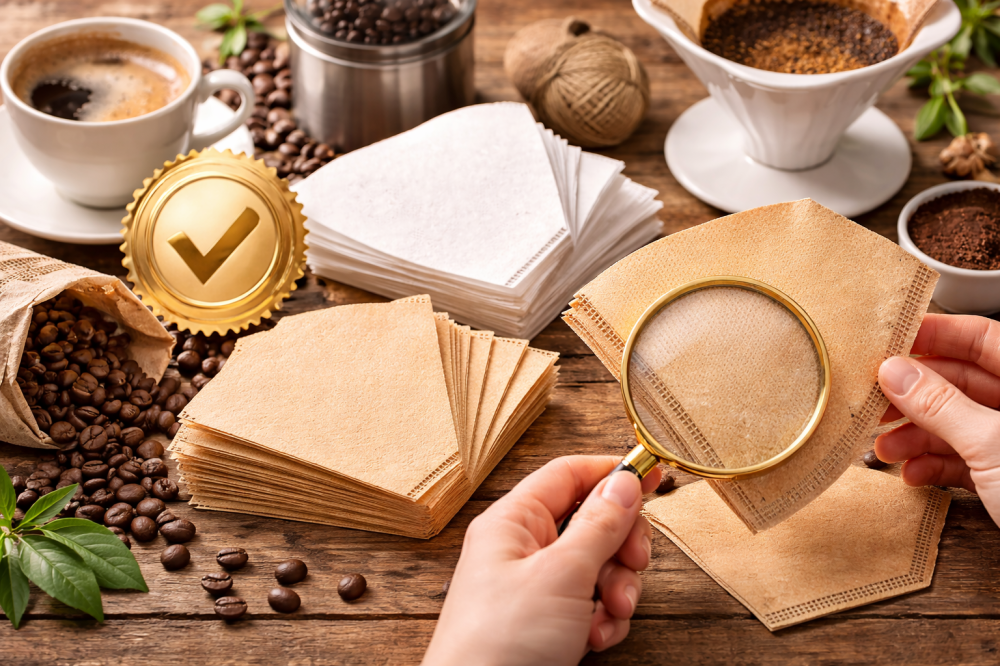
In the world of specialty coffee , the paper filter is the most influential element on the purity of the final cup. A poor-quality or counterfeit filter can impart an unpleasant papery taste, unexpectedly slow the flow, or absorb the natural oils that give coffee its body and creaminess. At Luxury Coffee , we receive daily inquiries from our customers in Jeddah and across the Kingdom about how to distinguish between genuine filters (such as Hario V60, Kalita Wave, Abaca, and Sibarist) and the counterfeit or inferior ones prevalent in some markets and online stores.
In this detailed article, we'll explain the telltale signs of a genuine, high-quality coffee filter and how to spot counterfeit or substandard products before they affect your cup. The goal is to help you make a safe purchase, focusing on the most frequently searched terms such as "How do I know if a V60 filter is genuine?", "Signs of genuine paper coffee filters," "Difference between genuine and fake Hario filters ," and "Genuine vs. fake Kalita filters ."
Contents of the article:
- Why is imitation so widespread in paper coffee filters?
- Key signs to ensure the filter is genuine (before opening)
- Signs after opening the box (practical tests)
- Practical tips from the coffee luxury section to avoid falling into the trap
- Frequently asked questions about the authenticity of paper filters
- Promotional paragraph for coffee luxury
Why is imitation so widespread in paper coffee filters?
With the rise of specialty coffee in Saudi Arabia, demand has increased for V60 (01 and 02) filters , Kalita Wave (155 and 185), and other brands like Cafec Abaca or Sibarist. This high demand has led some traders to import inferior Chinese or locally produced products bearing similar logos at significantly lower prices (sometimes half the original price). The result: a cup of coffee with a papery taste, an uneven flow, or poor extraction.
Key signs to ensure the filter is genuine (before opening)
- High-resolution packaging and printing
- Original: Sturdy cardboard box, very sharp printing (does not fade or smudge), clear Hario or Kalita logo, original Japanese text with accurate English translation, clear barcode, and often an FSC seal (for environmentally friendly products).
- Inferior/Counterfeit: Thin box, faded or blurry printing, inaccurate colors (Kalita's red tends toward orange), spelling mistakes in English or Japanese writing, no barcode or non-erasable barcode.
Signs after opening the box (practical tests)
- Paper texture and color
- Original: Very smooth, thin but firm paper (does not tear easily), bright and uniform white color (for oxygen-bleached type), or uniform natural light brown (unbleached). No strong paper smell.
- Poor quality: Rough paper, abnormally thick or very thin that tears when touched, pale white color or with yellow spots, strong paper smell even before rinsing.
- The shape of the folds and edges
- Original Hario V60 : Precise and regular folds, high-precision cut edges, no tears or rough edges.
- Original Kalita Wave : The waves are perfectly even, the edges are smooth, and there is no variation in height.
- Imitation: Uneven folds, distorted or irregular waves, rough edges or with cut remnants.
- Rinse test (most important)
- Rinse the original filter with hot water: the water comes out clean or very light in color, no paper smell after rinsing.
- Poor filter: Water comes out yellow/brown, strong paper smell persists even after two rinses, sometimes leaves a cartoonish taste in the cup.
- Flow rate and extraction
- Original: Regular flow, expected extraction time (e.g. 2:30-3:30 minutes for V60 02 at 18g).
- Poor: either too slow (blockage) or too fast (poor extraction), dull or bitter taste.
Practical tips from the coffee luxury section to avoid falling into the trap
- Buy only from trusted sources (specialty coffee shops, not from general sellers or anonymous Facebook groups).
- Request photos of the box from several angles before purchasing.
- Compare with the images on the official Hario or Kalita website (hario.com, kalita.co.jp).
- If you buy and are in doubt: try one filter with a known standard recipe; if the taste is different from your previous experience → it is probably not authentic.
- At Coffee Luxury , we guarantee the authenticity of every filter we sell (Hario, Kalita, Cafec, Sibarist) with a clear invoice and the possibility of return within 7 days if you do not like the performance.
You might like: Which should you choose, V60 white or brown filters?
Frequently asked questions about the authenticity of paper filters
- Are brown filters always bad? No, Kalita and Hario have excellent original unbleached versions, but a lot of cheap imitation brown is bad and gives off a papery taste.
- Could the box be genuine and the filters inside be counterfeit? Rarely, but it does happen in some refilled shipments – so focus on the paper texture and rinsing.
- What is the best way to get rid of the papery taste? Always rinse well, but if it persists → the filter is poor or not genuine.
- Are cheap Chinese filters always bad? Not all of them, but most don't reach the quality of original Japanese filters in terms of purity and flow.
At Coffee Luxury , we believe every detail of coffee preparation matters, which is why we carefully select 100% genuine paper filters from trusted Japanese brands: Hario V60, Kalita Wave, Cafec Abaca, and Sibarist – all guaranteed authenticity and your satisfaction. Shop now .