In the vast world of coffee, many wonder: Is there a fixed standard of identity for coffee that defines what constitutes "real coffee" or "good coffee"? The answer isn't a simple yes or no, as the concept of "identity" evolves across history, cultures, and scientific standards. In regular commercial coffee, there are legal standards (Standards of Identity) that define the minimum composition to prevent adulteration. In specialty coffee, however, it relies on rigorous sensory and evaluative criteria established by the Specialty Coffee Association (SCA) . In this in-depth article from Coffee Wellbeing , we'll explore, both historically and scientifically, whether there is a "standard of identity" for coffee, focusing on global standards, Arab (particularly Saudi) cultural standards, and the differences between commercial and specialty coffee.
What is the "Standard of Identity" in food?
An identity standard is a formal legal definition that specifies the essential characteristics of a food product for it to be legally called by that name. For example, in the United States (FDA), there are standards for many products, such as chocolate or ice cream, that specify the permitted ingredients and the required proportions to prevent adulteration.
Regarding coffee:
- In the realm of regular commercial coffee , there is no single, strict, universal standard of identity such as "must contain 100% Arabica beans." Most countries allow blends of Arabica and Robusta beans, and place limits on impurities or moisture. In some countries (such as Hawaii), there are strict laws regarding local coffee (it must contain a certain percentage of locally grown coffee).
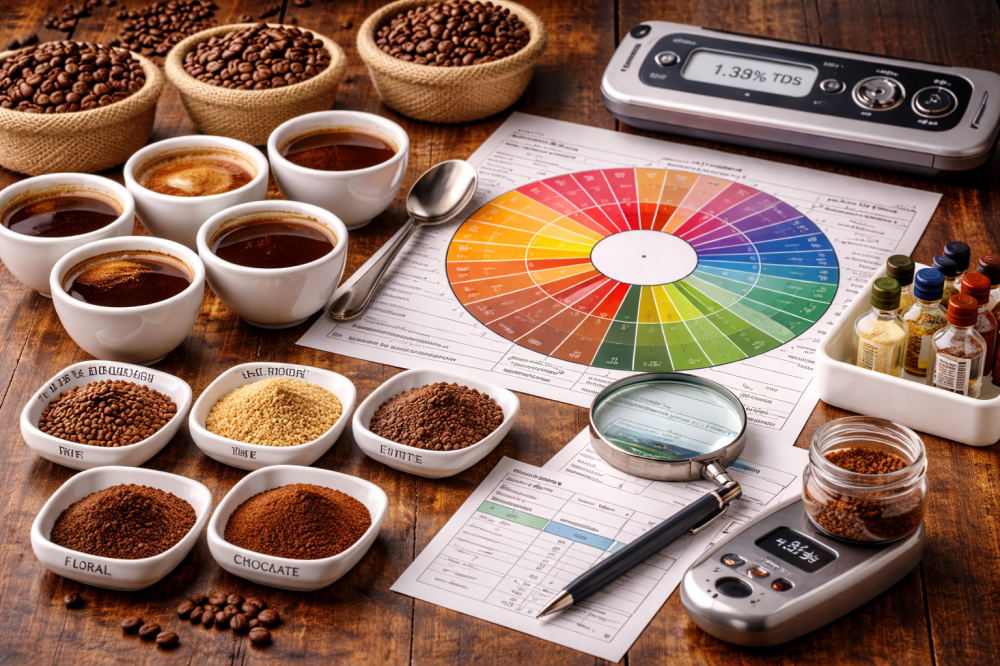
- In specialty coffee : there is no strict legal "identity standard," but rather sensory evaluation criteria from the SCA. Coffee is classified as "specialty" if it scores 80 points or more out of 100 in the Cupping (tasting) protocol.
This means that the "identity of coffee" is not fixed, but changes with "coffee waves":
- First wave : Coffee as a cheap commercial product (such as instant coffee).
- The second wave : Focus on espresso and cafes (Starbucks).
- The third wave : Focus on transparency, origin, and unique flavors (Single Origin).
Specialty Coffee Association (SCA) standards – the closest standard to "coffee identity"
The SCA is the most influential global authority on coffee quality. According to its updated definition:
- Specialty coffee is "coffee or a coffee experience that has unique characteristics, giving it higher value in the market."
- The basic criterion : Cupping Score ≥ 80/100.
- The main criteria in the evaluation include: aroma, flavor, acidity, body, balance, cleanliness, sweetness, and aftertaste.
In addition:
- Number of defects: The grains should be almost free of defects.
- Transparency: Complete information on origin, processing method, and farms.
- Sustainability: Environmental and social standards of increasing importance.
In Arab countries, there is no unified identity standard for coffee, but in Saudi Arabia , "Saudi coffee" has become a national symbol (Saudi Coffee Year 2022), with a focus on the coffee pot, cardamom, and hospitality as part of the cultural identity.
Arabic and Saudi coffee: a cultural identity or an artistic standard?
In Arab culture, coffee is not just a beverage, but a cultural identity . Saudi (or Gulf) coffee is distinguished by additions such as cardamom, cinnamon, or saffron, and is served in a traditional coffee pot (dallah) with accompanying hospitality rituals. In 2022, Saudi Arabia officially adopted "Saudi coffee" instead of "Arabian coffee" to reinforce national identity.
Is this an "identity standard"? Yes, culturally, but not as artistic as SCA standards. Traditional Saudi coffee is often Robusta or a blend, while modern specialty coffee focuses on high-quality Arabica.
How can you identify coffee with a good "identity" when buying?
- SCA rating : Look for a score of 80+ or higher (84+ is excellent).
- Transparency : Information on the origin (Single Origin), processing method (washing, natural drying), and roasting date.
- Cleanliness : Flawless grains, fresh scent.
- Certifications : Fairtrade, Organic, or Rainforest Alliance.
- In Arab countries : Choose products bearing trusted local brands or imported from specialized roasters.
Tip : "Good" coffee varies according to your taste – some people prefer a strong body (Robusta), and some prefer fruity acidity (Ethiopian Arabica).
Frequently asked questions about the coffee identity standard
- Is every coffee specialty if it is Arabica? No, it must get 80+ in sensory evaluation.
- Are there legal standards for coffee in Egypt or Saudi Arabia? There are standards for safety and fraud, but not a strict identity standard like the SCA for specialty coffee.
- What is the difference between commercial and specialty coffee? Commercial: Focus on quantity and price. Specialty: Focus on unique flavor and transparency.
- Does Saudi coffee have an official standard? Culturally yes (the coffee pot and hospitality), technically it depends on the SCA standards in modern specialty coffee.
- How do I know if the coffee is genuine? Ask for information on origin, roasting date, and try a sensory evaluation.
At Luxury Coffee , we are committed to serving coffee that meets the highest standards of identity and quality – whether it's our SCA Score 80+ specialty coffee from Single Origin crops, or our authentic traditional Arabic coffee that embodies the spirit of Saudi and Arab hospitality. We provide fresh beans from trusted roasters, with complete transparency regarding origin and roasting, as well as brewing equipment such as Kalita filters, French presses, and everything a coffee lover needs to discover their own unique "identity" in every cup.